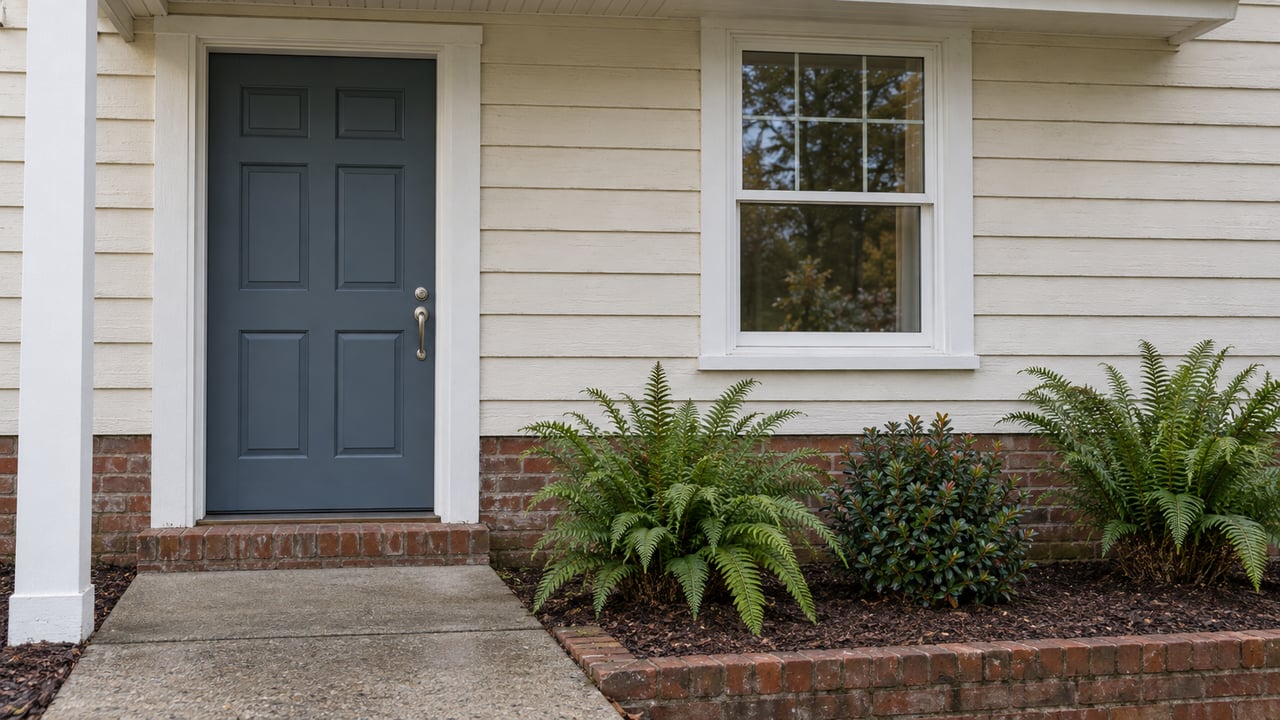
An inspector crouches near the foundation of a pre-1970 Bellingham home, tape measure in one hand, flashlight in the other, looking for a small vent pipe about an inch and a half wide poking out near the siding. A few feet away, buried under decades of lawn, there might be a two-inch fill cap flush with the grass. Inside, in the crawlspace or basement, two copper lines run through the foundation wall to nowhere: the supply and return for a furnace that stopped burning oil sometime after natural gas reached the neighborhood. None of this shows up on a listing. All of it can stop a closing.
Buried heating oil tanks are common enough in older Pacific Northwest housing stock that Whatcom County inspectors know the signs on sight, and Washington's own state disclosure form asks sellers directly whether one exists. What has changed, and what most people preparing to buy or sell an older Bellingham home in 2026 do not yet know, is what happens after the tank is found. For nearly three decades, an owner who discovered a buried tank could register it and lean on a state insurance policy built for exactly this problem. That policy ended in the summer of 2025. What replaced it does not work like insurance at all. It works like a grant cycle, with open windows and closed ones, and whether your transaction lines up with an open window is now the difference between a manageable negotiation and a five-figure expense with no state backstop.
What the Inspector Is Actually Looking For
Home inspectors describe a consistent set of clues: a vent pipe near the foundation, a fill pipe cap in the yard, copper lines entering through the basement wall, and sometimes a patch of grass that never quite fills in where an old delivery spill soaked the soil. A standard home inspection can flag these signs, but it stops there. Confirming an actual tank requires a separate service, usually called a tank sweep, using a metal detector or ground-penetrating radar. Bellingham has its own long-practicing example of this kind of specialist: Steven Smith of King of the House Home Inspection has spent years documenting exactly these findings in Whatcom County homes and teaching the next generation of inspectors at Bellingham Technical College.
The reason this matters at the negotiating table is that heating oil was the dominant home fuel across the region for decades before natural gas and electric heat took over, and when homeowners converted, plenty of tanks simply stayed in the ground. A house built before 1970 that once burned oil is a reasonable candidate for one, whether or not the current owner has ever heard about it.
The Disclosure Question Sellers Answer With Silence
Washington sellers fill out a standard disclosure form, commonly called Form 17, that asks directly about known conditions on the property, including heating systems and storage tanks. What a seller writes there, or does not write, becomes part of the record once a buyer is deciding whether to move forward.
A seller who genuinely does not know a tank exists is not hiding anything. Many current owners bought the home decades after the conversion happened and were never told. But from a buyer's side, an unanswered question on the disclosure form is not neutral. It means nobody has looked, which means the risk has not been priced into the offer at all. That gap is exactly what a tank sweep during the inspection period is designed to close before the transaction moves past the point where walking away gets expensive.
The Insurance Policy That Doesn't Exist Anymore
Until last year, Washington ran something called the Heating Oil Pollution Liability Insurance Program. The mechanism was straightforward: an owner registered their tank, paid into the program, and in return had access to coverage for corrective action costs, up to $60,000 per occurrence, if a leak turned up. It worked like insurance because it was insurance, backed by the state's Pollution Liability Insurance Agency, and it had been running since 1996.
That policy ended on June 30, 2025, with a short extended reporting window that closed on July 31, 2025. No new claims have been accepted since. Any release that happens on a property today does not get filed against that old policy. It falls under something new.
What Replaced It, and Why the Calendar Now Matters
The state agency did not shut the door on help. It replaced the insurance model with the Heating Oil Loan and Grant Program, a system that funds cleanup and tank work through direct grants and low-interest loans rather than a standing policy. On paper the numbers look similar: cleanup grants of up to $60,000, with combined grant and loan assistance capped at $75,000 per applicant. In practice, the mechanism behind those numbers is completely different, and the difference is what actually matters to someone under contract on a Bellingham home right now.
| Old system (ended 2025) | Current system | |
|---|---|---|
| Structure | Standing insurance policy | Competitive loan and grant program |
| How you accessed it | Register the tank, coverage was active | Submit an application during a scheduled window |
| Application timing | Anytime, ongoing | Twice a year, roughly May-June and November-December, each window open about 45 days |
| Review process | Claims adjustment | Full application review, environmental assessment, a state SEPA checklist with a public comment period, and coordination with the Department of Archaeological and Historical Preservation |
| Funding priority | First-come, covered by policy terms | Ranked by environmental risk tier, with vulnerable and overburdened areas prioritized |
The practical consequence is timing risk that did not used to exist. Under the old policy, a homeowner who found a leak could register and start the claims process the same week. Under the current program, help is only available if your discovery happens to line up with an open application window, and even then the process includes a formal environmental review before any money moves. If a tank turns up in the middle of an escrow period that falls between funding cycles, there is no fast state-backed remedy to point to. The negotiation has to be resolved with private funds, whether that means a price credit, an escrow holdback, or the seller paying for decommissioning out of pocket before closing.
Doing the Math During a Live Transaction
None of this means an oil tank should end a sale. Decommissioning alone, without any confirmed leak, tends to run in the range that specialty contractors on the west side of the state have quoted homeowners: roughly $5,000 to $10,000, depending on whether the tank is emptied and filled in place or fully excavated. That is a real cost, but it is a negotiable one, and it is far smaller than what a confirmed leak with contaminated soil can run once cleanup, testing, and remediation are added up.
The work itself has to be done or supervised by someone certified under state rules as an Underground Storage Tank Decommissioner, and a permit from the local fire authority is required before that work starts. In Whatcom County, that authority sits with the local fire marshal, following the same 2021 International Fire Code standard that governs decommissioning statewide. Buyers should ask for the decommissioning report and permit record by name rather than accepting a seller's word that "it was handled." A seller with the paperwork will produce it quickly. One without it usually means the work either never happened or was never documented, and undocumented work is treated by most lenders the same as no work at all.
What This Looks Like at the Table
For a buyer, the practical sequence is: request a tank sweep during the inspection period if the home's age and heating history suggest a tank is plausible, review the seller's disclosure answers with that possibility in mind, and if a tank is confirmed, ask specifically whether it was decommissioned with a permit and by a certified provider before assuming it is a non-issue. For a seller, the more useful move is often to get ahead of it. Ordering a sweep and, if needed, starting decommissioning before listing removes the uncertainty from buyer negotiations entirely and keeps the transaction on the seller's schedule rather than a lender's or a state agency's.
A Few Direct Answers
Does finding an oil tank automatically kill a sale? No. It becomes a negotiation over who pays for decommissioning or cleanup and when, not an automatic disqualifier.
Can I get state help paying for cleanup right now? Only if a new application cycle for the Heating Oil Loan and Grant Program happens to be open, and only after the required environmental review process. Outside those windows, private negotiation is the only near-term option.
Is the seller required to tell me if there's a tank? Washington's disclosure form asks directly about known heating systems and storage tanks. A seller who genuinely does not know cannot disclose what they don't know, which is exactly why a tank sweep matters independent of what the form says.
If you are preparing to list or buy an older home in Bellingham this fall and want to know how this plays out with your specific timeline, Spencer Flannery and the team at Flannery Group walk clients through exactly this kind of pre-listing and pre-offer groundwork every week. Reach out through our buyer services or seller resources pages to talk through what an inspection on your specific property is likely to turn up before you're staring at a five-day contingency clock.