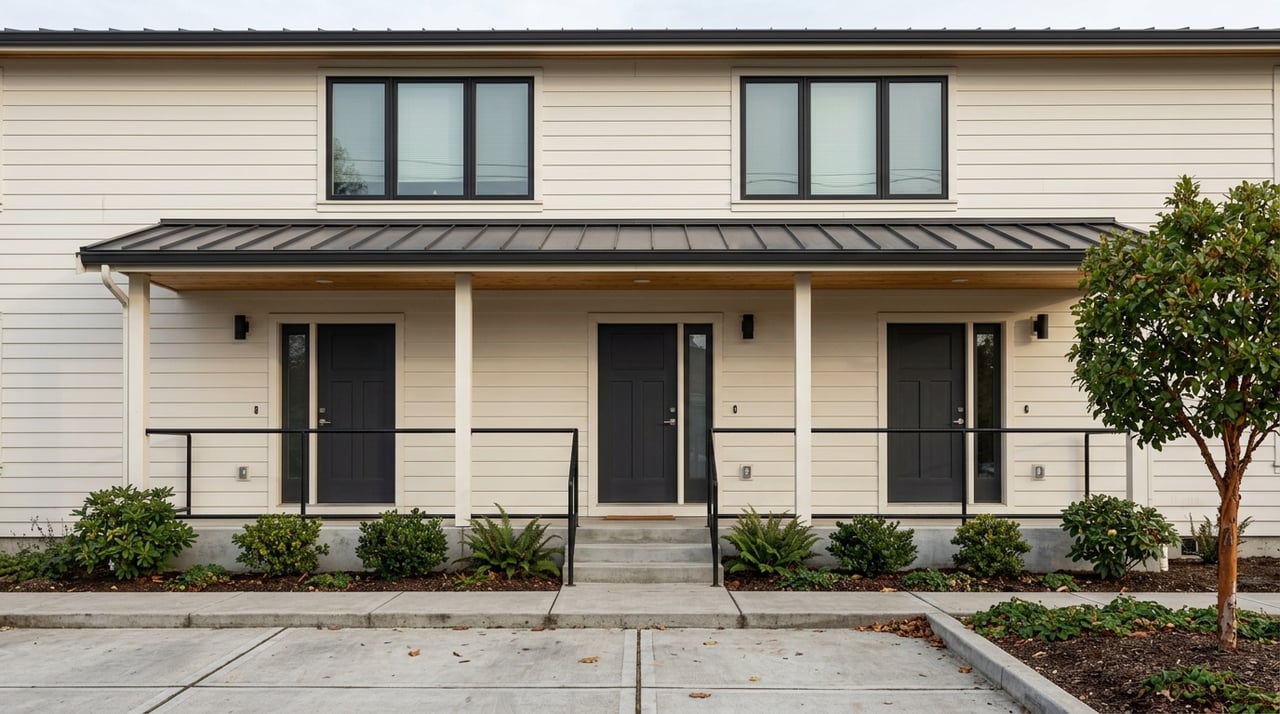
If you have been looking for small multifamily property in Skagit County, you have probably noticed the challenge right away: there are fewer duplexes, triplexes, and fourplexes than many buyers expect. That can make the search feel competitive, especially when you want a property that balances rental demand, manageable size, and long-term upside. The good news is that Skagit County’s housing trends point to real opportunity if you know where to look and what to evaluate first. Let’s dive in.
Why small multifamily matters in Skagit County
Skagit County still leans heavily toward detached housing. According to the county’s 2025 housing needs assessment, there were 57,797 housing units in 2024, and about 71% were single-family homes. That matters because it helps explain why small multifamily remains a relatively limited property type across the county.
At the same time, renter demand has clear support. The same county report says 43% of renter households were cost-burdened, meaning they paid more than 30% of income on housing costs. It also estimates Skagit County will need 17,450 net new housing units between 2020 and 2045.
That combination matters for investors and owner-occupants alike. When a market has affordability pressure, population growth, and a housing stock dominated by detached homes, smaller rental buildings can fill an important gap. In practical terms, that can support ongoing interest in duplexes, triplexes, fourplexes, and small apartment properties.
The county also notes that future housing solutions will likely need to go beyond ADUs and duplexes alone. More housing types and higher densities may be needed in urban growth areas and, in some cases, rural areas. The county also projects meaningful growth in the 65+ population by 2045, which may support demand for smaller, lower-maintenance housing options.
What small multifamily looks like here
In Skagit County, small multifamily usually means a practical mix of older and infill-style properties rather than large, institutional apartment projects. You are more likely to come across side-by-side duplexes, stacked duplexes, triplexes, fourplexes, small apartment buildings, and some mixed-use buildings with housing above ground-floor commercial space.
That mix fits the local planning direction in several cities. Research from Anacortes, Burlington, and Sedro-Woolley shows local support for more attached housing, multifamily options, and mixed-use residential formats in certain zones. For buyers, that means the best opportunities are often tied closely to zoning, parcel layout, and location within established in-town areas.
Best places to watch in Skagit County
Mount Vernon opportunities
Mount Vernon is the county’s largest city, with an estimated 2024 population of 35,344 and 13,363 households. Its 2020-2024 median gross rent was $1,405, and its median household income was $75,777. Those numbers make it an important market to watch for workforce-oriented rental property.
The city’s housing work plan points to factors that matter for small multifamily buyers, including the South Kincaid Subarea Plan, density changes in C-3 and C-4, and density-bonus regulations tied to affordable housing. In practical terms, buyers may find better odds in established in-town areas, downtown-adjacent blocks, and subareas influenced by updated planning efforts.
If you are searching Mount Vernon, it helps to focus less on fringe low-density areas and more on locations where the city has already signaled support for added housing capacity. That does not guarantee a fit for every parcel, but it can narrow your search in a smart way.
Burlington opportunities
Burlington had an estimated 2024 population of 10,945, and its 2020-2024 median gross rent was $1,746. That rent level stands out in the county and may catch the attention of buyers looking for stronger gross income potential.
The city’s zoning materials describe an RA-1 Residential Attached zone intended for duplexes, townhomes, and small multiunit buildings. Burlington’s planning framework also suggests more attached-housing capacity than many buyers might assume at first glance.
For your search, that makes infill locations near commercial services and arterial corridors worth a closer look. When attached housing is already part of the zoning intent, you may have a clearer path to finding viable small multifamily inventory.
Anacortes opportunities
Anacortes had an estimated 2024 population of 18,148, and its 2020-2024 median gross rent was $1,702. The city states that duplex and triplex housing is already enabled in most residential zones, and it encourages multifamily in several residential and commercial areas.
The city’s 2024 legislative updates also note that duplexes became permitted outright in R2, while triplexes, townhouses, and up to four attached units became permitted outright in R3. For buyers, that means zoning compatibility may be less of a hurdle here than in some other markets.
That said, easier zoning does not always mean easy execution. In Anacortes, parcel size, design standards, parking, and land cost may play a bigger role in feasibility. If you are comparing opportunities, it is smart to underwrite those physical and site-specific factors carefully.
Sedro-Woolley opportunities
Sedro-Woolley had an estimated 2024 population of 13,215. Its 2019-2023 median gross rent was $1,460, and its 2019-2023 median owner-occupied home value was $390,200.
City planning documents show support for multifamily and middle-housing concepts. The Urban Village Mixed-Use area is intended for multifamily, multi-level buildings, and the R-15 district allows multiplex developments of up to eight units per building.
For some buyers, Sedro-Woolley may feel like a more attainable entry point than Anacortes. If your goal is to find an older duplex or a value-add small apartment property with a lower acquisition basis, this market may deserve a closer look.
Unincorporated Skagit County
Unincorporated areas can offer opportunity, but they usually require more property-level due diligence. County planning documents emphasize urban-growth-area capacity, ADUs, and added housing types, but the exact fit of a parcel depends on code, utilities, access, and land constraints.
In many cases, buying outside the central cities means you need to verify more before writing an offer. Utilities, critical areas, access, flood issues, shoreline considerations, and zoning details can all affect whether a property works as intended.
How to think about a regional strategy
A countywide search can be more effective than looking at one city in isolation. Skagit County’s affordability analysis shows only about 30 affordable and available rental units per 100 renter households at 0-30% of area median income, and about 41 per 100 at 0-50% of area median income. That points to ongoing pressure in the rental market.
Because of that, a practical regional strategy may be to start with places that offer stronger in-town access and more zoning flexibility. Based on the research, that often means beginning with Mount Vernon, Burlington, and Anacortes, then expanding to Sedro-Woolley and selected unincorporated opportunities.
Rent levels also vary enough to shape your approach. Median gross rent is lowest among these cities in Mount Vernon at $1,405, while Burlington is at $1,746, Anacortes is at $1,702, and Sedro-Woolley is around $1,460. That does not tell the whole investment story, but it does suggest different income profiles and risk considerations across the county.
Underwriting basics for newer buyers
If you are newer to multifamily, start with the basics and stay disciplined. A small multifamily review should include current rents, occupancy, vacancy history, collection losses, taxes, insurance, utilities, maintenance, and reserves.
One of the biggest mistakes buyers make is focusing too much on price per unit. A lower price per door can look attractive, but the real question is whether the property’s stabilized income can support debt service after realistic expenses and vacancy.
A better framework is to look at net operating income, or NOI. That means reviewing rents and subtracting operating expenses and reserve deposits, rather than relying on gross scheduled rent alone. Historical occupancy trends and line-by-line expenses matter because they give you a more realistic picture of performance.
For smaller rental properties, this matters even more. Small multifamily can be a very useful niche, but each unit has a bigger impact on income when vacancy occurs. In a duplex or triplex, one turnover can change the numbers quickly.
Small multifamily due diligence checklist
Before making an offer, slow down and verify the basics. In Skagit County, local rules can change, and city or county code details often shape the real opportunity.
Use this checklist as a starting point:
- Confirm the exact zoning district
- Verify the allowed-use table for the property
- Review parking requirements
- Check permit history
- Confirm utility service and capacity
- Identify critical-area constraints
- Review flood or shoreline issues
- Check for recent code changes affecting middle housing or ADUs
- Review actual rent rolls and lease terms
- Analyze operating expenses, maintenance needs, and reserves
This is where local guidance can make a real difference. A property that looks strong online may have hidden constraints, while another with less obvious appeal may offer better long-term value once you verify the facts.
What this means for your next move
Small multifamily opportunities in Skagit County are not always abundant, but that is part of what makes them worth tracking closely. The county’s housing mix, affordability pressure, and projected growth all support the case for duplexes, triplexes, fourplexes, and small apartment properties as an important segment of the market.
If you are looking for your first rental property, a house hack, or a small portfolio addition, the most important step is to match the property to the location, zoning framework, and income reality. A good deal here is usually not just about finding something listed at the right price. It is about understanding where local planning supports this housing type and where the numbers truly work.
If you want help comparing Skagit County multifamily options, reviewing location tradeoffs, or building a practical search strategy, Flannery Group can help you move forward with clear local insight.
FAQs
What counts as small multifamily in Skagit County?
- Small multifamily usually includes duplexes, triplexes, fourplexes, small apartment buildings, and some mixed-use properties with housing above commercial space.
Which Skagit County cities are best to search for duplexes and triplexes?
- Based on local planning and housing documents, Mount Vernon, Burlington, Anacortes, and Sedro-Woolley are key places to watch, with unincorporated areas evaluated case by case.
Why is small multifamily important in Skagit County?
- Skagit County’s housing stock is still dominated by single-family homes, while renter cost burden and long-term housing demand create support for more small-scale rental housing.
What should you verify before buying a multifamily property in Skagit County?
- You should verify zoning, allowed uses, parking rules, permit history, utilities, critical areas, flood or shoreline issues, code updates, rent history, and operating expenses.
How should a first-time multifamily buyer analyze a Skagit County property?
- Start with rents, occupancy, vacancy, taxes, insurance, utilities, maintenance, and reserves, then evaluate whether the stabilized net operating income can reasonably support the property’s debt service.