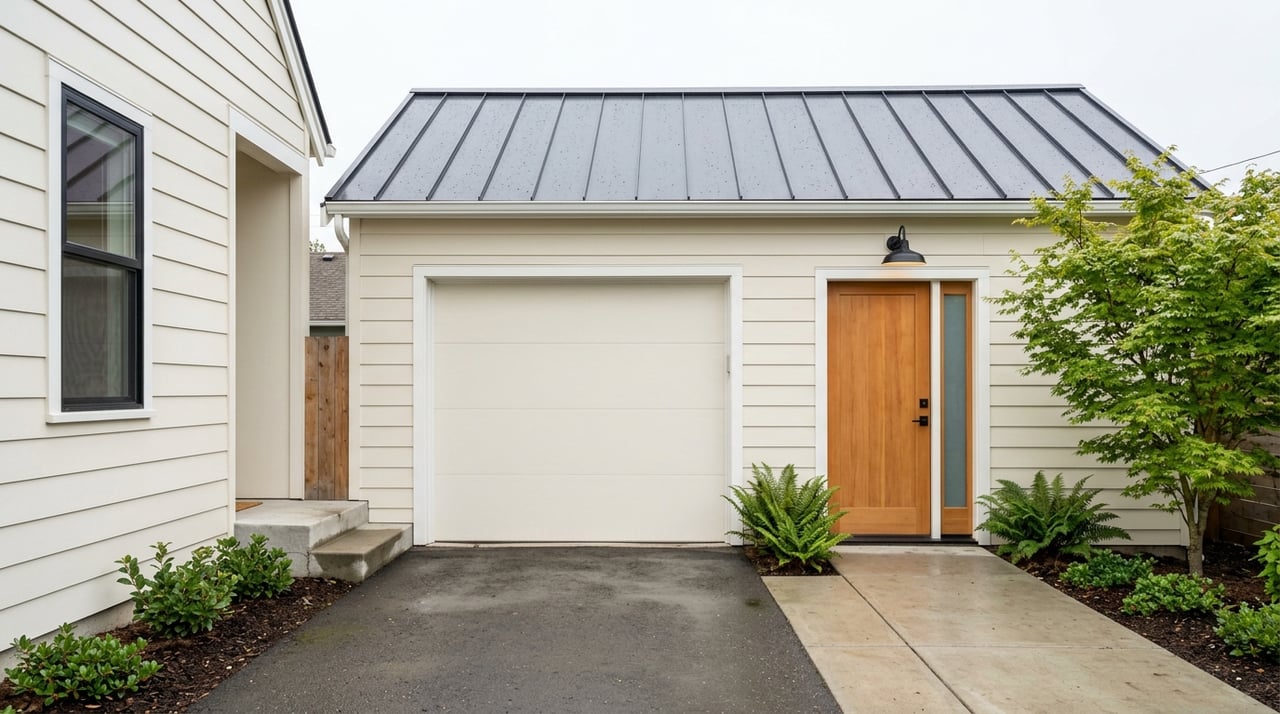
Wondering if a small rental portfolio can actually work in Everson? It can, but this is the kind of market where careful buying matters more than big promises. If you want to start small, manage risk, and look for practical upside, Everson gives you a few clear paths. Let’s dive in.
Why Everson fits small investors
Everson is a compact market with about 3,040 residents, 988 households, and 1,074 housing units. That smaller scale can work well for a first or early portfolio because you are not trying to compete in an oversized, fast-moving rental market. It also means you need to underwrite conservatively and avoid deals that only work if rents jump quickly.
The city covers about 1.5 square miles, so parcel details matter. In a market this small, the exact lot, utility setup, and zoning can make the difference between a simple rental and a property with future upside. That is why local, parcel-level review matters so much in Everson.
Start with realistic rent expectations
A good starting point for rent analysis in Whatcom County is HUD fair market rent data for the Bellingham MSA. For FY2026, HUD lists gross rents of $1,493 for a one-bedroom, $1,794 for a two-bedroom, $2,495 for a three-bedroom, and $3,010 for a four-bedroom unit. These figures include shelter plus tenant-paid utilities, except for phone, cable or satellite TV, and internet.
For a small investor, the key is how you use that data. HUD fair market rents are best treated as a benchmark, not an automatic target for a renovated unit. They reflect standard-quality recent-mover rents, so your underwriting should still account for vacancy, repairs, insurance, taxes, management, and utility allowances.
Focus on property types that match the code
In Everson, your best opportunities often come from buying property types that already align with local zoning rules. In the city’s residential zone, single-family homes are allowed by right, including site-built, manufactured, and modular homes. Duplexes are conditional uses there, and single-family or duplex layouts with ADUs need larger minimum lot sizes.
In the residential-multiple-use zone, the options widen. Detached single-family homes, duplexes, single-family homes with ADUs, and multifamily dwellings are all allowed. Duplex and multifamily lots are sized at 4,250 square feet per unit, which can create more flexibility if you find the right parcel.
Best first-purchase options
For many small investors, the most practical entry points are:
- Older detached homes on larger lots
- Duplexes where zoning already supports the use
- Properties with enough land and utilities to add an ADU
These options tend to offer a clearer path than buying a property and hoping the zoning works out later. In Everson, the details are too important for guesswork.
ADUs can create practical growth
Accessory dwelling units may be one of the clearest ways to grow income without jumping straight into a larger multifamily purchase. Everson allows ADUs in all residential zones and permits up to two ADUs per lot. ADUs are capped at 1,000 square feet.
There are still important limits. Detached ADUs need separate utility hookups, and ADUs are not allowed on lots that are not served by city sewer. The city does reduce ADU utility hookup fees and impact fees to 50% of the principal dwelling’s fees, which can help the numbers on the right property.
City parcels and county parcels differ
If you are looking near Everson, you also need to know whether a property is inside the city or in nearby unincorporated Whatcom County urban growth areas. Whatcom County’s updated ADU standards are more flexible in listed UGA districts. The county allows up to two ADUs per lot, does not require owner occupancy, and allows some existing garages or barns to be converted even if they do not meet current setback or lot coverage rules.
That difference matters. A garage conversion, basement ADU, or detached cottage may look possible at first glance, but the exact parcel location can change the answer. Before you write an offer, it is smart to verify zoning, sewer service, and whether the current structure and lot layout support your plan.
What a smart value-add plan looks like
In a market like Everson, the strongest value-add strategy is usually simple and legal. Instead of betting on luxury finishes or aggressive rent growth, focus on modest upgrades and unit-count opportunities that local rules support. That approach tends to reduce risk and create more durable returns.
A practical plan often looks like this:
- Buy a property with solid fundamentals
- Improve the interior with paint, flooring, and kitchen or bath updates
- Confirm whether the parcel supports an ADU, garage conversion, or duplex setup
- Add legal rental income only after zoning and utility questions are clear
This strategy fits local code well because the city allows ADUs in residential settings, and the RMU zone also allows multifamily use. If you want to build slowly, this kind of step-by-step plan is often easier to manage than taking on a major redevelopment project right away.
Understand Washington rent rules before you buy
Cash flow planning in Washington needs to account for current rent increase rules. Under Washington’s HB 1217 rent stabilization rules, landlords covered by the Residential Landlord-Tenant Act may not raise rent during the first 12 months of tenancy. They also must give at least 90 days’ written notice for rent increases.
For covered tenancies, rent increases are limited to no more than 10% or 7% plus CPI, whichever is less, over any 12-month period. Washington Commerce lists the 2026 maximum annual increase for covered tenancies at 9.683%. For investors, that means your deal should make sense at today’s numbers, not only after future rent increases.
Why conservative underwriting matters here
Everson’s small tenant base adds another reason to stay careful. In a larger city, high turnover or missed rent targets might be easier to absorb. In a smaller market, a vacancy or unexpected repair can have a bigger effect on your returns.
That is why a good Everson buy usually cash-flows at current market conditions. If a property only works with aggressive assumptions, it may not be the right first portfolio piece.
A simple framework for your first purchase
If you are just getting started, use a straightforward screen before you spend time chasing every listing.
Look for these basics
- Zoning that already supports the current use
- Lot size that may allow future ADU potential
- Confirmed sewer service if ADUs are part of your plan
- Layouts that can support modest renovations without major structural work
- Rent numbers that work after expenses, not just before them
Be cautious about these issues
- Properties where the second unit is not clearly legal
- Deals that depend on fast rent growth
- Lots with unclear utility or sewer access
- Renovations that require major reconfiguration before lease-up
- Assumptions based on county rules when the parcel is actually in the city
This framework helps you stay focused on properties that offer both current income and future flexibility. In a small market, discipline is often your biggest advantage.
Why local guidance matters in Everson
For a small investor, local brokerage support is not just about finding listings. In Everson, the bigger value often comes from understanding the difference between city-lot rules and county UGA rules, checking sewer service, and spotting which parcels may support a second unit or small multifamily setup.
That kind of review can help you avoid buying the wrong property for your goals. It can also help you move faster when the right parcel comes up, because you already know what details matter most.
If you want to start a small rental portfolio in Everson, the right first move is usually a practical one: buy a property with stable fundamentals, confirm the zoning and utility picture, and build from there. If you want help reviewing options in Everson or nearby Whatcom County, Flannery Group can help you evaluate properties with a local, data-driven lens.
FAQs
What makes Everson, WA a workable market for a small rental portfolio?
- Everson is a small, middle-income housing market where conservative underwriting, stable rents, and parcel-specific zoning review matter more than rapid appreciation assumptions.
What rent benchmarks should you use for an Everson rental property?
- A practical benchmark is HUD’s FY2026 Whatcom County fair market rent data: $1,493 for 1BR, $1,794 for 2BR, $2,495 for 3BR, and $3,010 for 4BR gross rent.
What property types are easiest to buy for an Everson rental portfolio?
- The clearest starting points are usually single-family homes, duplexes where zoning supports them, and larger-lot properties with potential for an ADU.
What should you know about ADUs in Everson, WA?
- Everson allows ADUs in all residential zones, permits up to two ADUs per lot, caps ADUs at 1,000 square feet, requires detached ADUs to have separate utility hookups, and does not allow ADUs on lots without city sewer.
How do city and county ADU rules near Everson differ?
- Nearby unincorporated Whatcom County UGA parcels may have more flexible ADU standards than city parcels, so you should verify the exact parcel location before assuming a conversion or detached unit is allowed.
How do Washington rent increase rules affect an Everson rental investment?
- For covered tenancies, rent cannot be raised in the first 12 months, 90 days’ written notice is required, and annual increases are capped under state rules, with the 2026 maximum listed at 9.683%.
What is the best value-add strategy for a first Everson rental property?
- A strong entry strategy is often modest interior improvements paired with legal unit-count growth, such as an ADU or duplex configuration, if the parcel and utilities support it.